www.biomining.ca https://www.biomining.ca Elements of Bio-mining Wed, 03 Jul 2019 19:37:49 +0000 en-US hourly 1 https://wordpress.org/?v=6.0 Elements of Biomining Project Explainer Videos https://www.biomining.ca/elements-of-biomining-project-explainer-videos/ Wed, 03 Jul 2019 16:27:28 +0000 https://www.biomining.ca/?p=385 The Elements of Biomining communications team at Laurentian University has created “explainer” videos that illustrate the three major aspects of the Elements of Biomining project. You can view them at https://vimeo.com/showcase/elementsofbiomining or from the videos embedded below. Elements of Biomining: High Temperature Reactor Systems to Extract Nickel and Produce Sº in High Sulfide Po Tailings from Nadia Mykytczuk on Vimeo. ... Read More

The post Elements of Biomining Project Explainer Videos appeared first on www.biomining.ca.

]]>
The Elements of Biomining communications team at Laurentian University has created “explainer” videos that illustrate the three major aspects of the Elements of Biomining project. You can view them at https://vimeo.com/showcase/elementsofbiomining or from the videos embedded below.

Elements of Biomining: High Temperature Reactor Systems to Extract Nickel and Produce Sº in High Sulfide Po Tailings from Nadia Mykytczuk on Vimeo.

Elements of Biomining: Passive Treatments for Low Sulfur Mine Wastes from Nadia Mykytczuk on Vimeo.

Elements of Biomining: Improved Biological Treatment of Sulfate- and Selenium-Containing Wastewaters from Nadia Mykytczuk on Vimeo.

The post Elements of Biomining Project Explainer Videos appeared first on www.biomining.ca.

]]>
EBM Project featured at 2019 Mining and the Environment International Conference https://www.biomining.ca/ebm-project-featured-at-mining-and-the-environment-international-conference/ Wed, 03 Jul 2019 16:08:59 +0000 https://www.biomining.ca/?p=379 Research from the EBM team will be featured at the Mining and the Environment International Conference on June 24th, 2019 at Laurentian University. The session includes ten talks featuring researchers from Laurentian University, the University of British Columbia, and the University of Toronto. Please see the linked PDF for the program schedule. https://www.biomining.ca/wp-content/uploads/2019/07/Mining-and-Environment_Biomining-Session_Draft-schedule_june20.pdf

The post EBM Project featured at 2019 Mining and the Environment International Conference appeared first on www.biomining.ca.

]]>
Research from the EBM team will be featured at the Mining and the Environment International Conference on June 24th, 2019 at Laurentian University. The session includes ten talks featuring researchers from Laurentian University, the University of British Columbia, and the University of Toronto.

Please see the linked PDF for the program schedule. https://www.biomining.ca/wp-content/uploads/2019/07/Mining-and-Environment_Biomining-Session_Draft-schedule_june20.pdf

The post EBM Project featured at 2019 Mining and the Environment International Conference appeared first on www.biomining.ca.

]]>
M.Eng/MASc project in Biomining Project https://www.biomining.ca/m-engmasc-project-biomining-project/ Tue, 14 Nov 2017 18:20:54 +0000 https://www.biomining.ca/?p=360 M.Eng/MASc project in Biomining Extraction of base metals from sulfide minerals has led to worldwide challenges with sulfide-laden tailings that represent a potential environmental problem and are costly to clean up. These waste “reservoirs” can also contain a large quantity of metals, such as nickel, gold, or copper, albeit at low concentrations. The Biomining Consortium led out of the University ... Read More

The post M.Eng/MASc project in Biomining Project appeared first on www.biomining.ca.

]]>
M.Eng/MASc project in Biomining

Extraction of base metals from sulfide minerals has led to worldwide challenges with sulfide-laden tailings that represent a potential environmental problem and are costly to clean up. These waste “reservoirs” can also contain a large quantity of metals, such as nickel, gold, or copper, albeit at low concentrations. The Biomining Consortium led out of the University of Toronto is aiming to develop novel bioprocesses and bioleaching technologies that could treat mine discharges/wastes, with the aim of recovering valuable metals and alleviating environmental risks/challenges.

We are seeking an MASc/M.Eng-level graduate student to work on life cycle assessment (LCA) and technoeconomic assessment of existing and developing technologies for management of mine discharges. Potential activities include:

  • Developing an inventory of tailings ponds at key sites within Canada and North America, to assess current environmental impacts and management costs
  • Work with other team/consortium members to assess economic and environmental impacts of their respective novel recovery and treatment technologies. This will involve creation of theoretical “scaled-up” processes from lab scale operations, assessing capital and operating costs, and projecting overall performance in terms of metal recovery, improvements to water quality, and other regulatory requirements.

Desired background of candidate:

Candidates should have experience in process engineering or systems analysis. Additionally, experience in life cycle assessment, technoeconomic assessment, and/or mining/mineral processing would be advantageous. Background in biological processes may be helpful, but not essential.

Timeline:

The project is underway. We are seeking MASc. candidates that are available to start a graduate program by January, 2018, or existing M.Eng. students able to begin project work by January 2018.

Interested candidates should submit a CV and statement of interest to Professor Bradley A. Saville ([email protected]), using the email subject line “Biomining Graduate Project”.

The post M.Eng/MASc project in Biomining Project appeared first on www.biomining.ca.

]]>
Elements of bio-mining: Engineering collaboration aims to turn mine waste into valuable metals https://www.biomining.ca/elements-bio-mining-engineering-collaboration-aims-turn-mine-waste-valuable-metals/ Wed, 13 Sep 2017 15:33:43 +0000 https://www.biomining.ca/?p=344 http://news.engineering.utoronto.ca/elements-bio-mining-engineering-collaboration-aims-turn-mine-waste-valuable-metals Posted September 13th, 2017 by Tyler Irving Elements of bio-mining: Engineering collaboration aims to turn mine waste into valuable metals An industry-academic collaboration led by U of T Engineering professors is studying the use of microorganisms to treat mine waste in tailings ponds. The researchers also hope to extract valuable metals that could offset the cost of processing. (Photo: ... Read More

The post Elements of bio-mining: Engineering collaboration aims to turn mine waste into valuable metals appeared first on www.biomining.ca.

]]>
http://news.engineering.utoronto.ca/elements-bio-mining-engineering-collaboration-aims-turn-mine-waste-valuable-metals
Posted September 13th, 2017 by Tyler Irving

Elements of bio-mining: Engineering collaboration aims to turn mine waste into valuable metals

Mine drainage

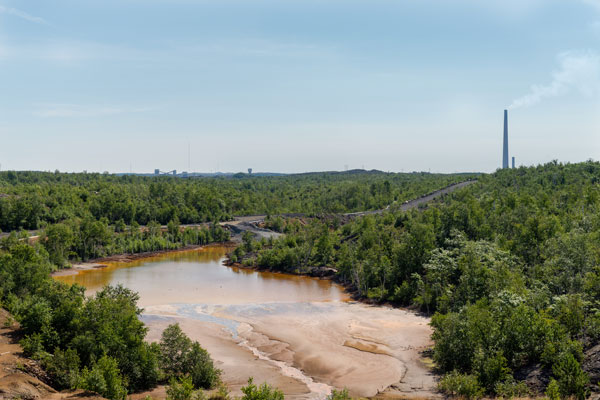
An industry-academic collaboration led by U of T Engineering professors is studying the use of microorganisms to treat mine waste in tailings ponds. The researchers also hope to extract valuable metals that could offset the cost of processing. (Photo: mine drainage- Sean Caffrey)


They are invisible to the naked eye, able to withstand extreme conditions and capable of breathing rocks. They are the microbes that thrive in tailings ponds at mining sites around the world, and a team of Canadian researchers believes they are the key to transforming waste material into something much more valuable.

“There are bugs that thrive on metabolizing sulfur, others on metabolizing iron,” says Professor Vladimiros Papangelakis (ChemE). “If we can control such biochemical reactions, we could both remediate the waste and recover valuable metals that could pay for the cost of processing.”

Papangelakis, along with Professor Elizabeth Edwards (ChemE) is leading the Elements of Bio-mining project, a multidisciplinary collaboration between U of T Engineering, Laurentian University, and the University of British Columbia (UBC), as well as a number of technology, engineering and mining companies, including Glencore, Vale, Teck, Barrick and Hatch.

For a full list of team members and partners, visit the Elements of Bio-mining website

Together, the team is developing ways to process a number of different types of material left over from mining activities across Canada, from nickel mines in Sudbury, Ont. to coal mines in British Columbia. They aim to understand how native microorganisms at these sites convert chemicals one form to another, and how they might encourage certain beneficial reactions while discouraging others.
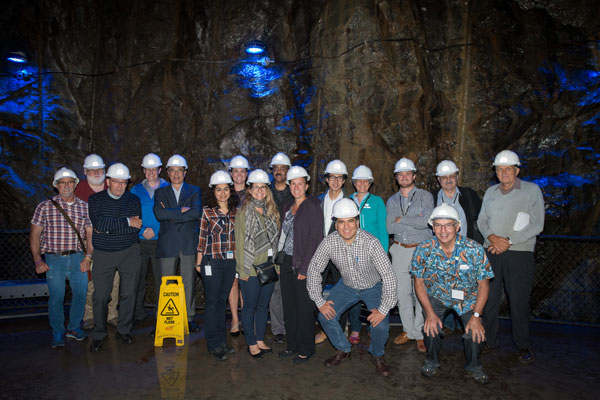
Elements of Bio-mining team

Members of the Elements of Bio-Mining project team at the In the Footsteps of Sudbury’s Miners exhibit at Science North in Sudbury, Ont. (Photo: Sean Caffrey)

For example, nickel refining produces tailings, which are rich iron sulfide. When exposed to the oxygen in the atmosphere, chemical reactions begin to convert the sulfides into sulphuric acid. This process — known as Acid Mine Drainage (AMD) — is catalyzed by microorganisms that live in the rainwater or melting snow that washes over the tailings.

The sulphuric acid can dissolve any nickel that remains in the tailings, as well as other metals such as copper and zinc and even toxic elements like arsenic, selenium, cadmium, mercury. Because of its toxic and acidic nature, tailings water cannot be discharged into the environment unless it is collected and treated. Currently, these tailings sit in enormous ponds around the mine sites — the water covers the tailings, acting as an oxygen barrier and slowing the AMD process.

Papangelakis and his collaborators hope to treat these tailings using bioreactors, vessels that enable them to control the temperature, pH, dissolved oxygen levels and other culture conditions. One idea is to encourage the growth of organisms that would convert the sulfide not into sulfuric acid, but into elemental sulfur, which may have some value if recovered. At the same time, the metal-rich wastewater could be captured and refined to recover metals, potentially providing a revenue source to offset the cost of treatment.

Other members of the team are looking at the waste rock that was separated before the refining process. Here sulfur is less of a problem, but there are still potentially valuable metals that could be recovered. Professor Nadia Mykytczuk of Laurentian University is studying ways to encourage bacteria to selectively dissolve these metals from heaps of rock, a process known as in-situ bio-leaching.

“There is a large diversity of organisms out there that we are only starting to understand,” says Mykytczuk. “Some of them like oxygen, but others thrive under anaerobic, or oxygen-free conditions. We’re looking at the whole range of possibilities, and once we find something promising, we can decide how to address specific types of waste.”

A third branch of the team is focusing on waste from coal mines, which is often high in selenium. Though a necessary nutrient in small amounts, too much selenium can be toxic to many forms of life; for example, it can interfere with the development of fish embryos, reducing the number of viable adults in the next generation.

“There are some microorganisms that can actually use selenate, the dissolved form of selenium, for energy,” says Professor Sue Baldwin of UBC, another one of the project partners. “They take the selenate and turn it into elemental selenium, which precipitates out as nanoparticles attached to the organism’s cells. In this form, it’s no longer dissolved and you can just filter it out of the water.”

Baldwin points out that selenium is just one of many pollutants that exist in waste from coal mining. And as with nickel mining, there may also be valuable metals or other materials that could be recovered through biochemical transformations.

Papangelakis says that there may be up to $7 billion dollars worth of nickel alone locked in the tailings from Sudbury’s mines. “The question is, can this value be recovered in a way that makes the treatment and remediation process economically viable?” he says.

In addition to the universities and the industrial partners, the project has attracted support from a number of research funding agencies, including the Natural Sciences and Engineering Research Council (NSERC), Genome British Columbia and Australia’s Commonwealth Scientific and Industrial Research Organisation (CSIRO). Most recently, the project received $4 million from the Ontario Research Fund.

“It’s a very challenging problem that needs to be solved,” says Papangelakis. “But we have assembled a very good knowledge base, with experienced people in mining, chemistry, biochemistry and process engineering. There will be cross-fertilization and new ideas, which will create a springboard to understand new science and launch initiatives we haven’t thought of yet. To me, this is the most exciting part.”

http://news.engineering.utoronto.ca/elements-bio-mining-engineering-collaboration-aims-turn-mine-waste-valuable-metals 

The post Elements of bio-mining: Engineering collaboration aims to turn mine waste into valuable metals appeared first on www.biomining.ca.

]]>
Eating Junk: Using Bacteria to clean waste water from BC mines https://www.biomining.ca/eating-junk-using-bacteria-clean-waste-water-bc-mines/ Thu, 24 Aug 2017 01:19:52 +0000 https://www.biomining.ca/?p=330 https://www.genomebc.ca/eating-junk-using-bacteria-clean-waste-water-bc-mines/  

The post Eating Junk: Using Bacteria to clean waste water from BC mines appeared first on www.biomining.ca.

]]>
https://www.genomebc.ca/eating-junk-using-bacteria-clean-waste-water-bc-mines/


The post Eating Junk: Using Bacteria to clean waste water from BC mines appeared first on www.biomining.ca.

]]>
Sudbury Star article: Mining microbes could unlock wealth, clean tailings https://www.biomining.ca/sudbury-star-article-mining-microbes-unlock-wealth-clean-tailings/ Fri, 04 Aug 2017 03:21:31 +0000 https://www.biomining.ca/?p=325 By Mary Katherine Keown, The Sudbury Star Thursday, August 3, 2017 12:42:32 EDT AM With luck, ingenuity and some scientific know-how, Sudbury’s tailings ponds could become a new source nickel, copper and zinc. Researchers from Laurentian University, the University of Toronto and the University of British Columbia met at the Vale Living with Lakes Centre on Wednesday at a symposium ... Read More

The post Sudbury Star article: Mining microbes could unlock wealth, clean tailings appeared first on www.biomining.ca.

]]>

By Mary Katherine Keown, The Sudbury Star

Vlad Papangelakis, a project lead on biomining research, is participating in a biomining research symposium in Sudbury. John Lappa/Sudbury Star

Vlad Papangelakis, a project lead on biomining research, is participating in a biomining research symposium in Sudbury. John Lappa/Sudbury Star

With luck, ingenuity and some scientific know-how, Sudbury’s tailings ponds could become a new source nickel, copper and zinc.

Researchers from Laurentian University, the University of Toronto and the University of British Columbia met at the Vale Living with Lakes Centre on Wednesday at a symposium to discuss biomining research.

“The topic of discussion is developing technologies that aim to remediate waste and effluent waters from mining operations in Sudbury and British Columbia,” Vlad Papangelakis, a professor at the University of Toronto and the project lead of the biomining research, said Wednesday. “We hope to recover some value from locked metals in these residues that will offset the processing costs.”

The value of residual nickel in Sudbury tailings amounts to $7 billion, according to recent world nickel prices.

“There is significant economic interest, therefore, to use the eco-friendly processes being developed by (biomining) for remediation and base metal extraction,” symposium organizers said in a release.

But as Papangelakis points out, researchers are less motivated by potential profit than they are by the prospect of cleaning up the tailings in environmentally-friendly ways.

“The goal is to mitigate environmental damage and in doing so, try to recover as much locked metal as possible to make a profit and offset the processing cost,” he explained.

Researchers have secured funding for five years, including $4 million from the Ontario Ministry of Research, but could expand their work to 10 years.

“So we cannot see things from a snapshot of today’s economy and metal prices,” Papangelakis said. “We have to look in the future … There are too many unknowns here. We are generating new knowledge.”

Researchers hope to harness the naturally occurring microbes near tailings ponds to use them to metabolize the waste products.

“The best bacteria are those that exist in the contaminated areas because these are already adapted to the chemistry and the metals and the toxicity of the environment,” Papangelakis said. “We will simply try to make these bacteria happier by changing the conditions and how we feed them in order to steer certain chemical reactions in the direction we want to remediate and to try to recover some metals.”

As Papangelakis points out, the bacteria are simply catalysts that facilitate and speed up the chemical reactions that would have taken place anyway.

There are three broad research groups, each tackling a different aspect of the phenomenon. Papangelakis and his colleagues at the University of Toronto are working with tailings with a high sulfur content and 0.7 per cent nickel in a lab or reactor.

“They have to put them somewhere else to do the chemistry,” he said.

The group from LU will be doing passive, in situ treatment of the tailings.

“It’s remediating without moving anything, actually,” Papangelakis said. “This is possible because there’s low sulfur content in the rocks and tailings.”

The group from UBC will look exclusively at effluent water, which contains selenium.

“The selenium problem is also a Sudbury problem,” Papangelakis said. “Selenium is everywhere in the rocks and the minerals, which are extracted. It ends up in the tailings and as a consequence it ends up in seeping waters and must be controlled, because it’s highly regulated.”

The three universities will come together to help each other out and to “remediate the toxicity of tailings and effluent in the mining industry,” Papangelakis concluded.

[email protected]

Twitter: @marykkeown

705 674 5271 ext. 505235

The post Sudbury Star article: Mining microbes could unlock wealth, clean tailings appeared first on www.biomining.ca.

]]>
PIR Live Event – Mining and the Environment with Nadia Mykytczuk https://www.biomining.ca/pir-live-event-mining-and-the-environment-with-nadia-mykytczuk/ Sat, 27 May 2017 01:28:57 +0000 https://www.biomining.ca/?p=291 Project team member Nadia Mykytczuk was interviewed for a Partners in Research Live Event “Mining and the Environment”. In this webinar, Dr. Nadia Mykytczuk from Laurentian University uses props, video footage and animations to give an introduction to mining and its impact on the environment. Dr. Mykytczuk also shows us how we can make mining cleaner and “greener”, and how ... Read More

The post PIR Live Event – Mining and the Environment with Nadia Mykytczuk appeared first on www.biomining.ca.

]]>

Project team member Nadia Mykytczuk was interviewed for a Partners in Research Live Event “Mining and the Environment”.

In this webinar, Dr. Nadia Mykytczuk from Laurentian University uses props, video footage and animations to give an introduction to mining and its impact on the environment. Dr. Mykytczuk also shows us how we can make mining cleaner and “greener”, and how bacteria fit into this picture!


The post PIR Live Event – Mining and the Environment with Nadia Mykytczuk appeared first on www.biomining.ca.

]]>